

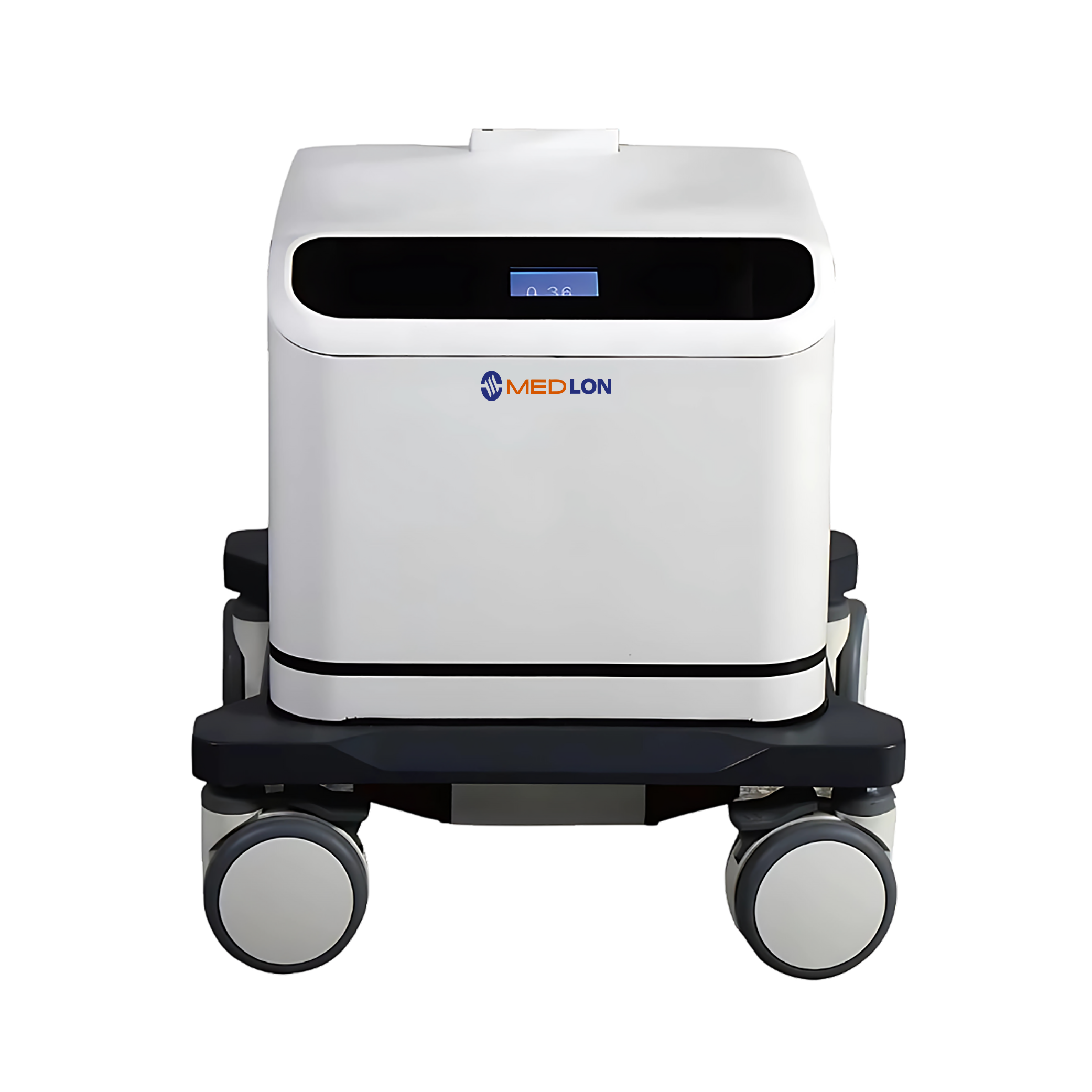

Ventilator System MVS-702 features 15-inch TFT LCD touch screen for user-friendly interaction. With a power input ranging from 250 VA to 900 VA, it is capable of delivering high-quality ventilation support across a broad spectrum of medical environments. It offers various ventilation modes, allowing for tailored respiratory support based on patient needs. This system operates with an air compressor and requires a gas source of oxygen and air. Additionally, it offers a variety of oscillogram displays, allowing for detailed analysis of the patient's respiratory status.
| Ventilation Modes | PRVC, APRV, DUOLEVEL, V-SIMV, P-SIMV, P-A/C, V-A/C, IPPV, PCV, PSV, SPONT/CPAP, SIGH, MANUAL |
| Ventilator Tidal Volume (Vt) | 20 to 2000 mL |
| Ventilator Frequency (Freq) | 1 to 100 bpm |
| Ventilator Oxygen Concentration | 21% to 100% |
| Ventilator I:E Ratio | 4:1 to 1:8 |
| Ventilator PEEP | 0 to 40 cmH₂O |
| Ventilator Pressure Trigger Sensitivity | -20 to 0 cmH₂O (based on PEEP) |
| Ventilator Flow Trigger Sensitivity | 0.5 L/min to 30 L/min |
| Ventilator Pressure Control (PC) | 5 to 80 cmH₂O |
| Ventilator Pressure Support (PS) | 0 to 80 cmH₂O |
| Ventilator SIGH | Off, 1/100 to 5/100 |
| Apnea Ventilation | Off, 5 s to 60 s |
| Ventilator Pressure Limit | 20 to 100 cmH₂O |
| Monitoring Frequency | 0 to 100/min |
| Monitoring Tidal Volume (Vt) | 0 to 2500 mL |
| Monitoring MV (Minute Volume) | 0 to 99 L/min |
| Monitoring Airway Pressure | 0 to 100 cmH₂O |
| Monitoring Dynamic Lung Compliance | 1 to 1000 mL/cmH₂O |
| Monitoring Oxygen Concentration | 15% to 100% |
| Power Failure | Alarm on AC power loss |
| Battery Low Voltage | ≤ 11.3 ± 0.3 V |
| No Tidal Volume | Alarm within 6 s |
| High/Low Minute Volume | 5 to 99 L/min / 1 to 30 L/min |
| High/Low Airway Pressure | 20 to 100 cmH₂O / 0 to 20 cmH₂O |
| High/Low Oxygen Alarm | 19% to 100% / 18% to 99% |
| Continuous Pressure | (PEEP + 1.5 cmH₂O) >16 s |
| Other Alarms | Suffocation (5 to 60 s) Fan Error Oxygen Deficit |
| Max Limited Pressure | < 12.5 kPa |
| Display | 15 |
| Oscillograph Display | 3 of 5 can be shown simultaneously |
| Alarm Types | 14 Visual/Sound Alarms |
| Casters | 4 Wheels, 2 Brakes |
| Gas Source | O₂, Air |
| Pressure | 280 to 600 kPa |
| Voltage | 220 V ± 22 V |
| Power Frequency | 50 Hz ± 1 Hz |
| Input Power | 900 VA (with compressor) 250 VA (without) |
| Oscillogram Types | P-T, F-T, V-T, P-V, F-V, P-F |
| Air Compressor Dimensions (L × W × H) | 685 × 690 × 1140 mm |
| Main Engine Dimensions (L × W × H) | 560 × 560 × 615 mm |
| Air Compressor Net Weight | 63 kg |
| Air Compressor Gross Weight | 98 kg |
| Main Engine Net Weight | 19 kg |
| Main Engine Gross Weight | 32 kg |
Our Ventilator System MVS-702 is ideal for use in intensive care units (ICUs), emergency departments, and operating rooms, where patients require precise and reliable ventilation. It is suitable for adults, pediatrics, and neonates, supporting various ventilation modes tailored to individual patient needs.
Our Ventilator System MVS-702 is ideal for use in intensive care units (ICUs), emergency departments, and operating rooms, where patients require precise and reliable ventilation. It is suitable for adults, pediatrics, and neonates, supporting various ventilation modes tailored to individual patient needs.
Consult Our Experts
Frequently Asked questions
What makes the Ventilator System suitable for critical care environments like ICUs and operating rooms?
The Ventilator System is equipped with multiple advanced ventilation modes (such as PRVC, APRV, and SIMV), real-time monitoring capabilities, and a variety of alarm systems. Its ability to adjust to the needs of adult, pediatric, and neonatal patients makes it a reliable choice for high-acuity settings like ICUs, emergency rooms, and surgical units.
How does the Ventilator System support personalized respiratory care for patients with varying needs?
The Ventilator System offers adjustable tidal volumes (20–2000 mL), frequencies (1–100 bpm), oxygen concentrations (21%–100%), and numerous control parameters. This allows clinicians to fine-tune settings based on each patient’s lung mechanics and oxygenation needs.
What types of oscillogram displays does the Ventilator System support, and how do they aid clinical decision-making?
The Ventilator System supports five oscillogram types: P-T (Pressure-Time), F-T (Flow-Time), V-T (Volume-Time), P-V (Pressure-Volume), and F-V (Flow-Volume), with any three viewable simultaneously. These graphical representations help clinicians track and assess the patient's respiratory status in real time.
How does the alarm system in the Ventilator System enhance patient safety?
The Ventilator System includes 14 visual and audio alarms for various conditions including power loss, high/low minute volume, high/low oxygen levels, apnea, suffocation, and fan or oxygen source failure. These alerts allow for immediate intervention, reducing risks associated with delayed responses.
Can the Ventilator System continue functioning during a power outage?
Yes, the Ventilator System includes a battery with low-voltage alerts and alarms on AC power loss, ensuring continued patient support during power interruptions.
What gas sources are required for operating the Ventilator System?
The Ventilator System operates with both oxygen and medical air, requiring a pressure input of 280 to 600 kPa. This allows it to deliver controlled, accurate gas mixtures for ventilation.
Is the Ventilator System designed for easy transportation within a hospital?
Yes, the compact and mobile design, including four caster wheels (two with brakes), makes it easy to move the device between rooms or departments as needed.
What is the significance of the “Sigh Function” in the Ventilator System?
The sigh function helps in alveolar recruitment by providing periodic deep breaths. This is particularly useful in preventing atelectasis and improving oxygenation in long-term ventilated patients.
Are Ventilator Systems suitable for pediatric patients?
Yes, they are designed for both pediatric and adult patient care.
What makes the Ventilator System a reliable choice for hospitals and ICUs?
The Ventilator System offers advanced respiratory support with multiple ventilation modes including IPPV, SIMV, CPAP, PRVC, APRV, and more. Its integrated real-time monitoring, servo-controlled humidifiers, and adjustable dual-heating pipelines ensure optimal clinical performance and patient comfort. These features make it a reliable and trusted choice for intensive care and emergency units globally.
How do Ventilator Systems enhance patient comfort during long-term ventilation?
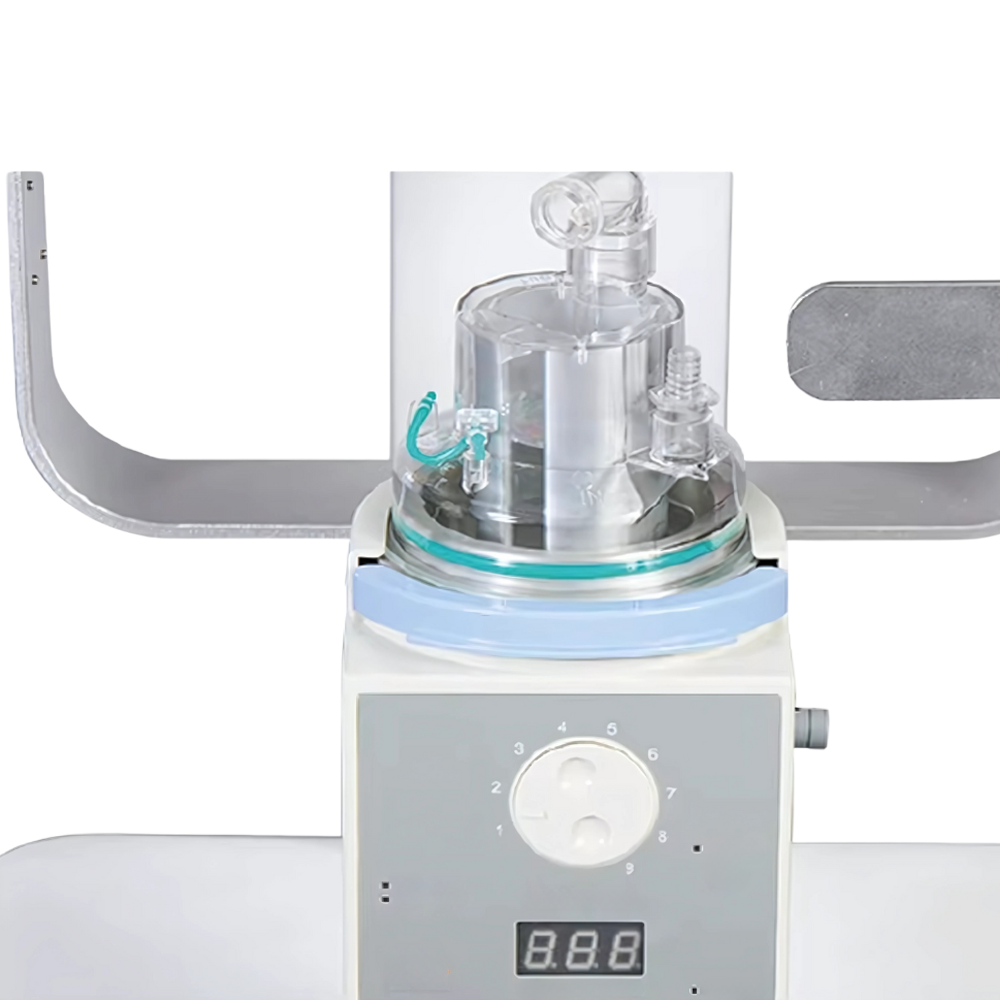
Ventilator Systems are equipped with advanced humidifiers featuring adjustable humidity levels and dual heating pipelines. This ensures consistent warmth and moisture in the airflow, minimizing irritation and improving patient comfort, especially for those requiring extended ventilatory support.
Can Ventilator Systems be used in emergency transport or field conditions?
Yes, offers portable ventilator system options within its product range. These units are compact, lightweight, and durable, making them suitable for emergency transport or on-site critical care.
How does the touchscreen interface on the Ventilator System improve clinical efficiency?
The high-resolution TFT or LCD touchscreen provides intuitive navigation and real-time parameter tracking. This allows clinicians to make rapid, accurate adjustments to ventilation settings, improving patient outcomes and workflow efficiency.


