

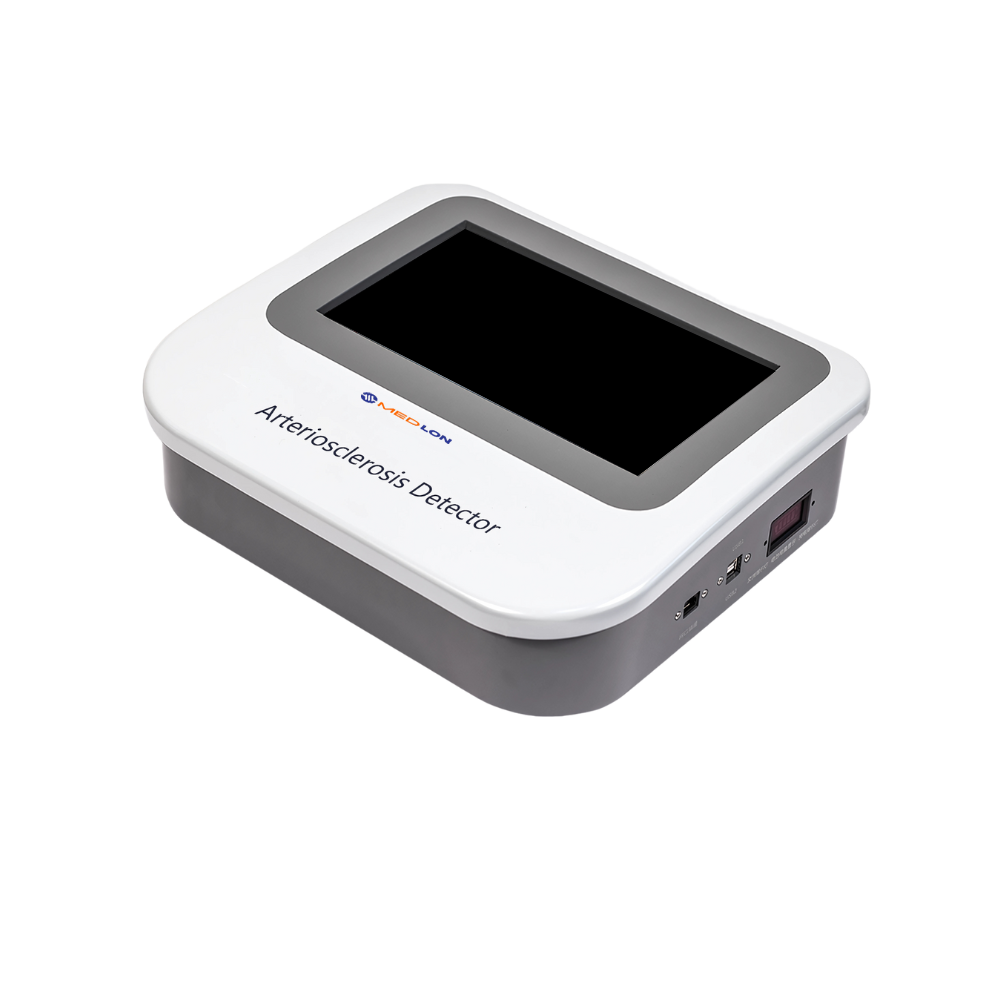
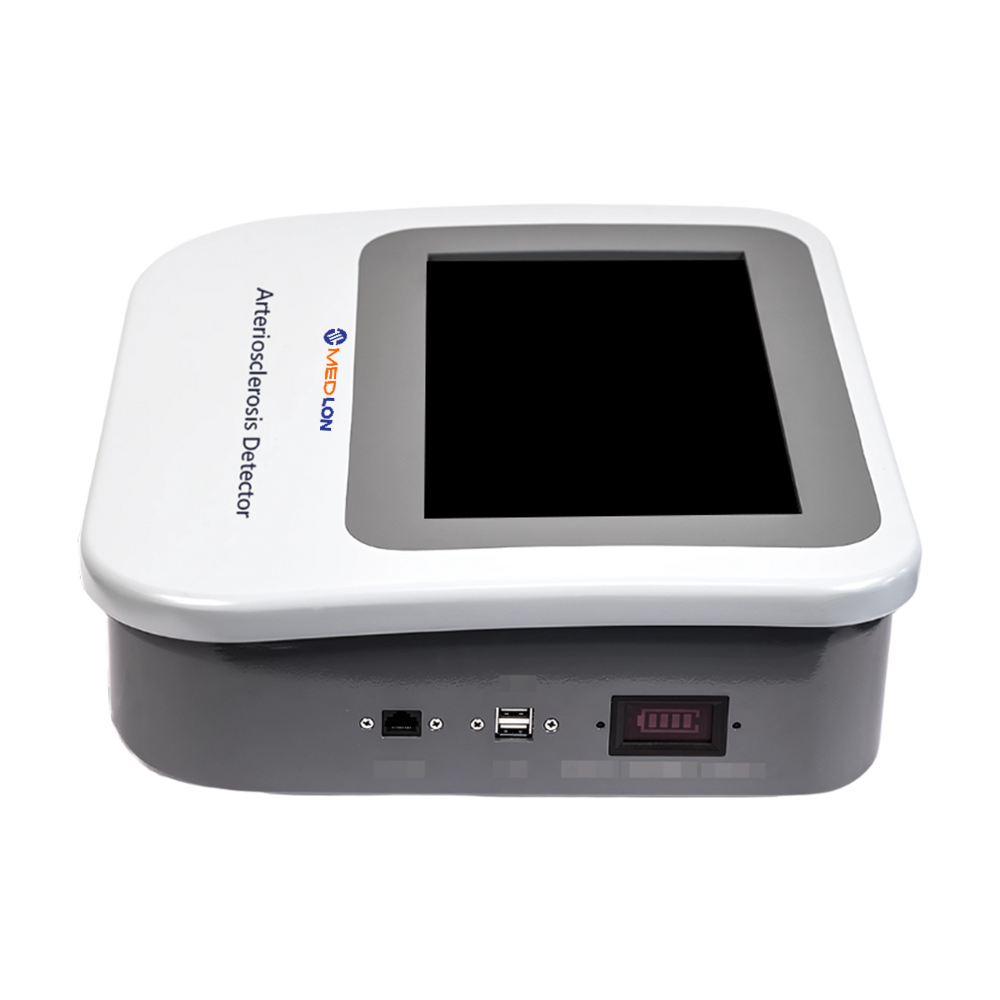
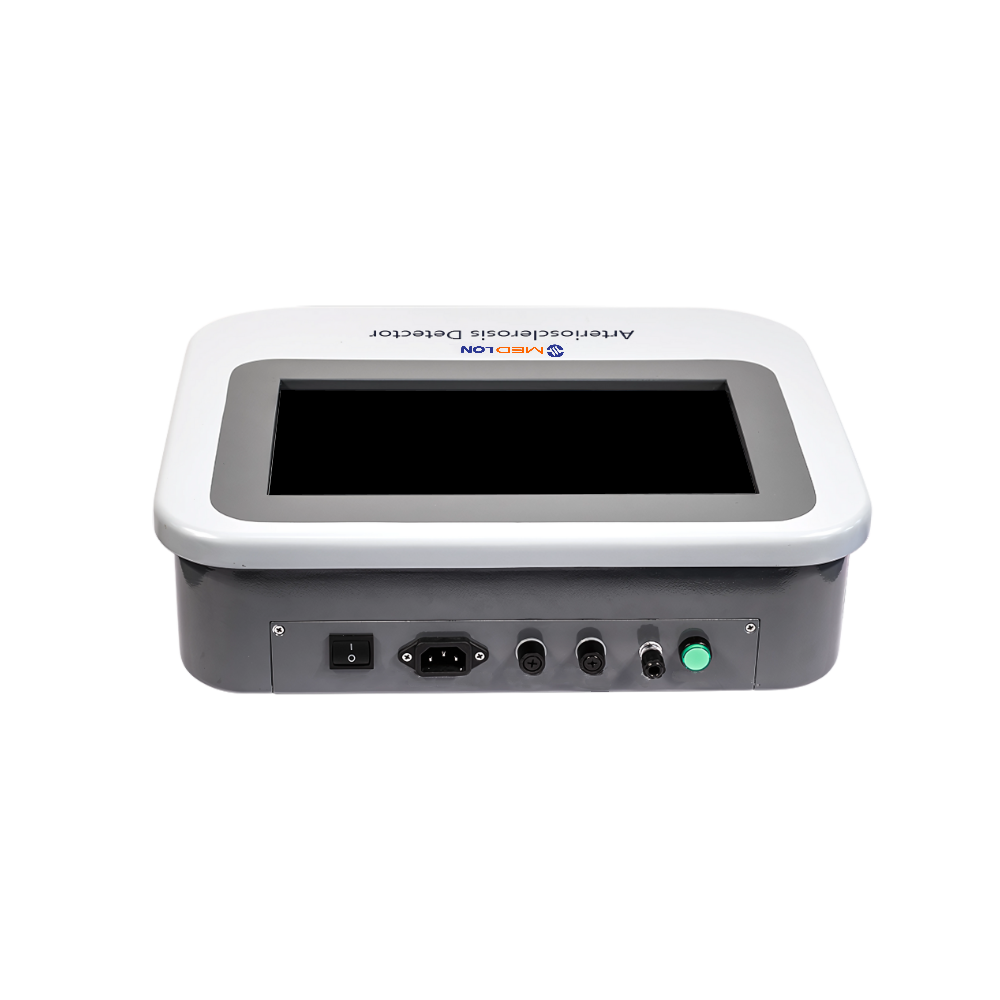
Arteriosclerosis Detector MAD-702 measures key parameters, including baPWV, ABI, PVR, SBP, DBP, MAP, and PP, with a blood pressure range of 0 to 260 mmHg. It achieves exceptional accuracy using the Oscillometric method and simultaneous compression of all limbs. Supports network connectivity for data upload and integration with health systems. Combining precision, speed, and portability, our detector is ideal for early diagnosis of arteriosclerosis and cardiovascular diseases.
| Measurement Parameters | baPWV (brachial-ankle pulse wave velocity) ABI (brachial-ankle index) BAI (body adiposity index) HR (heart rate) PVR (pulse wave recording) SBP(systolic blood pressure) DBP (diastolic blood pressure) MAP(mean arterial pressure) PP(pulse pressure) |
| Measurement Method | Blood pressure measurement using oscillography |
| Pressurization Method | Synchronized pressurization of limbs |
| Measurement Location | Limbs (ankles, brachial arms) |
| Arm Circumference Range | 20 to 38 cm |
| Lower Limb Width Range | 16 to 33 cm |
| Blood Pressure Measurement Range | 0 to 260 mmHg |
| Pulse Rate Measurement Range | 40 to 199 BPM |
| Blood Pressure Module Accuracy | ±3 mmHg under normal working environment |
| Measurement Accuracy | < 0.4 kPa (±3 mmHg) |
| Repeatability | < 0.533 kPa (4 mmHg) |
| Number of Blood Pressure Modules | 4 (independent working blood pressure pumps) |
| Number of Cuff Cycles | 8,000 inflation and deflation cycles |
| Database | Global racial database capable of measuring populations up to age 100 |
| Control System | Branded industrial control computer |
| Data Connectivity | Online transmission, remote management, and batch data upload |
| Display | 12.1-inch HD LCD screen |
| Power Supply | 115VA, voltage 220V |
| Battery Capacity | 5200 mAh lithium battery |
| Battery Working Time | Up to 3 hours |
| Dimensions | 450 × 410 × 120 mm |
| Weight | 7.8 kg |
Arteriosclerosis Detector MAD-702 is used in clinical and remote settings to assess arterial stiffness, measure ABI and baPWV, and help diagnose early stages of arteriosclerosis and cardiovascular diseases.
Industrial control computer system × 1 set
High-definition color LED display × 1 set
Logictech wireless mouse × 1 piece
Logictech Wireless keyboard × 1 piece
Cuff extension cable 2m × 1 set
Limbs Cuff × 1 set
PSB(3C) power cable × 1 root
Accurate arterial stiffness assessment
Fast, non-invasive measurement
Reliable results with limb compression
Cardiovascular risk prediction
Network-enabled data management
Portable with long battery life
Clinically validated precision
Clear display with 12.1-inch screen
Industrial control computer system × 1 set
High-definition color LED display × 1 set
Logictech wireless mouse × 1 piece
Logictech Wireless keyboard × 1 piece
Cuff extension cable 2m × 1 set
Limbs Cuff × 1 set
PSB(3C) power cable × 1 root
Arteriosclerosis Detector MAD-702 is used in clinical and remote settings to assess arterial stiffness, measure ABI and baPWV, and help diagnose early stages of arteriosclerosis and cardiovascular diseases.
Consult Our Experts
Frequently Asked questions
How does the device perform measurements?
The detector uses Oscillometric or Doppler-based methods for non-invasive arterial health assessments, ensuring accuracy and patient comfort.
How reliable is these Arteriosclerosis Detector?
These ensures precision and reliability with advanced measurement techniques, making it a trusted choice for vascular health assessments.
How does the device perform measurements?
These Arteriosclerosis Detector uses oscillometric or Doppler-based methods to ensure precise vascular assessments while maintaining patient comfort.
What display and interface features does the detector offer?
The device features high-resolution screens and intuitive interfaces, making navigation and data interpretation simple for healthcare professionals.
Is calibration or maintenance required for accurate readings?
Regular calibration and routine maintenance are recommended to ensure long-term accuracy and reliability.
Does the device allow for multi-limb assessments?
Yes, these enable simultaneous four-limb measurements, improving speed and accuracy in arteriosclerosis detection.
